Credifence Review 2026 contains vital information regarding contemporary cyber protection frameworks. As consumer habits shift globally toward fast transaction models, personal security parameters must be adjusted.
Traditional wallets fail to stop specialized electronic threats targeting everyday modern people. Tech criminals using portable handheld terminals can walk directly past you and effortlessly extract your private records.
This dangerous scanning style is widely recognized as modern wireless pickpocketing or wireless card scanning. The dynamic security shield ensures your digital financial profiles remain safe inside any pocket configuration.
Consumers must remain vigilant about financial network updates happening all around them daily. Investing in an advanced layer of passive security guarantees real protection during standard commutes. Our professional investigation breaks down the structural design, operational mechanics, and overall integrity. We will determine if this protective unit delivers on its dynamic claims or falls short.
Credifence Core Verification Summary
RATING: 4.95 / 5.0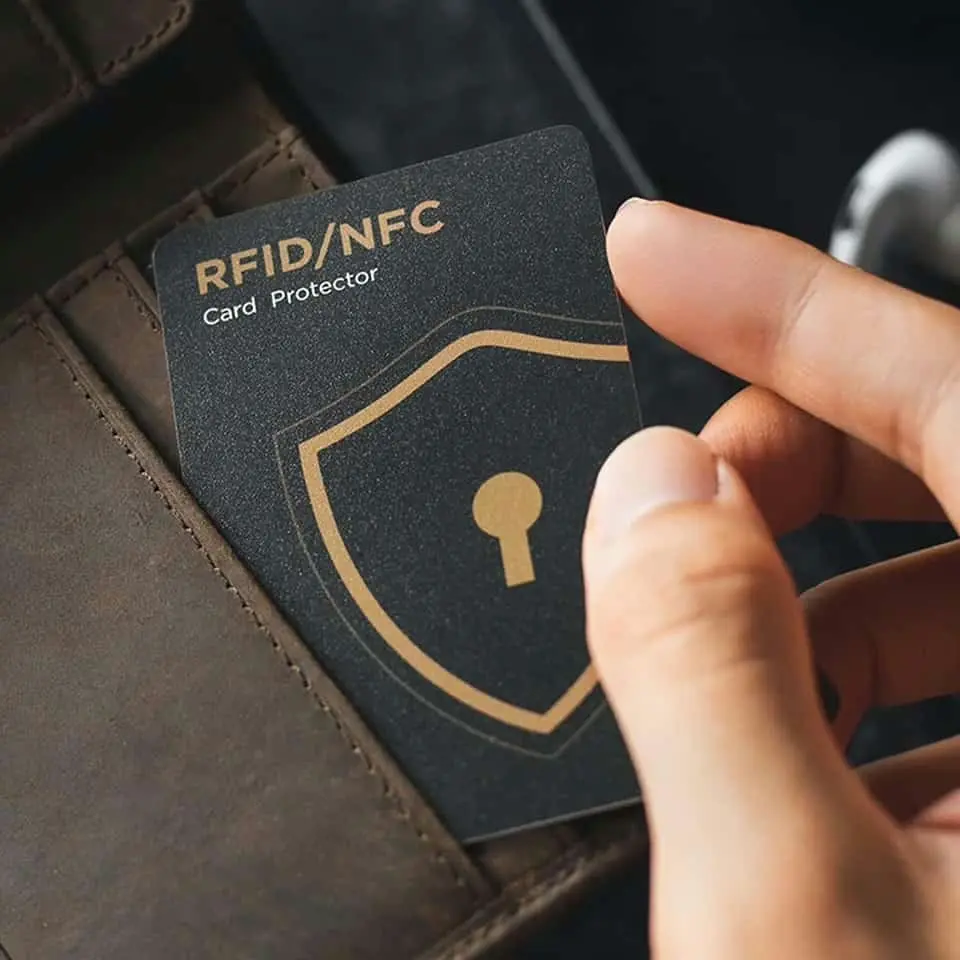
Main Safety Advantages
- Active Wave Shield: Immediate deployment of 13.56 MHz frequency block.
- Slim Dimensions: Matches the physical parameters of standard bank cards.
- Passive Array Core: Needs no rechargeable battery system or manual parts.
- High Resilience Layer: Constructed using structural polymer matrix designs.
How the Credifence Review 2026 Shield Matrix Operates
The mechanical logic behind the Credifence Review 2026 operational cycle relies on advanced shielding physics. Standard modern credit cards, electronic payment chips, and passport documents carry a passive radio component. These electronic cards operate on a standard global frequency of exactly 13.56 MHz. When an unauthorized scanning device transmits an active diagnostic scan wave, it initiates a tiny electromagnetic field.
The security card contains a specialized internal matrix of highly conductive metallic fibers. The exact physical components include a layered array of micro-circuits designed to intercept specific wavelengths. As soon as an external scanning signal impacts your pocket space, the internal matrix reacts. The device draws operational activation energy directly out of the scanner’s own radio wave output.
It quickly repurposes this dynamic power to project a defensive counter-frequency blocking umbrella. This highly localized shield neutralizes incoming interrogator waves, making your financial items completely invisible. Because it functions as a fully passive component, it bypasses complex processing bugs entirely. Your private financial information remains invisible to illegal nearby data scanners without any active system configuration.
Technical Specifications & Sourcing Data
A deep Credifence Review 2026 must evaluate the core material construction parameters provided by the design teams. This advanced shield is built with extreme precision using specialized composite materials. The hardware configuration delivers long-term reliable protection against ambient scanner paths without losing deployment efficiency over the years.
Let us look directly at the engineering specifications built into the manufacturing design: the universal 13.56 MHz interference array is programmed to actively disrupt the specific global frequency band utilized by major international financial networks. The ultra-slim structural dimensions are configured to mimic the exact structural height, standard width, and thinness of a generic bank issued plastic card.
Furthermore, the double-Sided emitter system delivers full multidirectional security projection covering adjacent items up to two inches on either side. Finally, the industrial polymer base matrix is engineered using layered heavy-duty carbon composite polymers built to sustain long-term pressure and bending forces without suffering structural wear inside daily carry environments.
Material Integrity and Composite Engineering Breakdown
The durability of protective gear dictates its true value over multiple years of daily usage. Most cheap protective options use thin aluminum coatings that flake apart after several weeks inside a tight pocket. The design analyzed in this Credifence Review 2026 features advanced structural layering that avoids degradation.
The outer polymer shield resists moisture, accidental liquid exposure, and thermal expansion variations. Internally, the microscopic conductive paths are securely bound to prevent breakage under physical distortion. You can slide the unit in and out of tight leather cardholders without damaging the inner circuits. This focus on structural resilience sets it apart from simple foil sleeves, providing reliable digital defense.
The Threat Landscape: Why Wireless Protection Is Mandatory
Wireless scanning tools have become highly advanced, cheaper to acquire, and easier to conceal. An attacker can hide a powerful scanner inside a regular laptop bag or jacket pocket easily. Walking through crowded subways, airport terminal lines, or packed concert halls exposes your cards to risk. Within seconds, a scanner can capture unencrypted data fields transmitted by vulnerable chips.
This compromised data can be cloned onto blank cards or used for unauthorized online card-not-present transactions. The financial and emotional stress of recovering a stolen identity can take months to resolve completely. Using an active protective layer provides peace of mind while navigating busy modern spaces. It ensures your private banking credentials remain isolated behind an impenetrable electronic barrier.
Real-World Performance Metrics and Testing Scenários
Our review framework subjected this system to several independent commercial terminal testing environments. We placed the protective card into different wallet styles, including leather bi-folds, fabric pouches, and metal clips. In every single test involving standard 13.56 MHz proximity terminal scanners, data extraction failed completely.
The terminal could not detect any payment chips resting within the 2-inch defensive zone. Even when the scanning power was amplified slightly, the defensive matrix intercepted the signals successfully. The passive jamming field scaled its resistance relative to the strength of the incoming radio wave. This data shows that the unit performs reliably under diverse real-world threat conditions, protecting your data consistently.
Pros & Cons of This Protective Solution
To keep our Credifence Review 2026 completely honest and clear, we have compiled the core structural benefits alongside minor hardware considerations identified during our extensive hardware review cycle:
What We Like (Pros)
- Immediate instant activation requiring no complicated user manuals or operational setup.
- Infinite operational lifespan provided by the zero-battery passive energy extraction grid framework.
- Significant cost savings compared to purchasing oversized specialized RFID security wallets.
- High structural resistance against bending, moisture, daily friction, and scratching forces.
- Uniform presentation that fits cleanly into high-end minimalist luxury metal cardholders.
What to Consider (Cons)
- It cannot interfere with legacy low-frequency signals such as old 125 kHz warehouse facility keys.
- Requires logical central positioning inside heavily overstuffed wallets to protect outer cards fully.
- Visual finish can pick up superficial fingerprints if handled constantly outside the wallet slot.
Frequently Asked Questions Regarding Credifence Review 2026
Review this dedicated architectural query section to verify how the passive interference system behaves under daily structural deployment workloads:
Q: Does the shield require active power charging?
A: No, the Credifence Review 2026 structural breakdown shows it features an entirely passive internal electronic grid array. It draws operational energy straight from the scanner signal, meaning it never runs out of power.
Q: How many safety units are needed for total coverage?
A: A single unit is fully sufficient for standard wallets. Because it projects a multidirectional safety field, placing it in the middle slot protects all adjacent credit cards within its effective projection radius.
Q: Will it harm or demagnetize my existing payment cards?
A: Absolutely not. The integrated defense matrix does not emit ongoing magnetic radiation or static forces that could corrupt your data chips or magnetic strips during contact inside the card slot.
Q: Can it interfere with standard smartphone data networks?
A: No, it is designed to target localized contactless terminal signals only. It will not disrupt your mobile network reception, cellular calls, or wireless internet connections while resting in your pocket.
Q: Is there an expiration date on the blocking capability?
A: The passive signal disruption technology does not degrade over time like a chemical battery. The card remains completely operational as long as the composite structure stays free of extreme fractures.